
AI Adoption Without Governance Creates Real Enterprise Risk
AI Control and Operations
As AI tools, models and agents spread across enterprise systems, many organisations lack visibility into how AI is influencing operational decisions — creating new risks around accountability, regulatory obligations such as the EU AI Act, and uncontrolled operational cost.
Talk to Our AI Governance TeamOrganisations Are Accountable for the AI Systems They Deploy

Are You Confident Your Organisation Can Demonstrate the Governance and Oversight Required of an AI Deployer?

Many organisations are rapidly adopting AI tools, copilots, models and autonomous agents across enterprise systems and workflows. But regardless of how these systems are introduced, the organisation using them remains accountable for how AI operates and influences decisions.
Under the EU AI Act, organisations that use AI systems within their operations are considered “deployers.” This means they are responsible for ensuring those systems are governed, monitored and compliant. This includes responsibility for how AI systems scale operationally and how their usage impacts cost across the organisation.
Without clear operational control, organisations risk...
Regulatory Investigation
if AI-driven decisions cannot be explained or justified
Suspension of AI Systems
where governance or monitoring controls canot be demonstrated
Loss of Public Trust
if AI-driven outcomes cannot be defended
Operational Disruption
if AI deployments must be halted to address comliance failures
Cost and Scalability in Enterprise AI
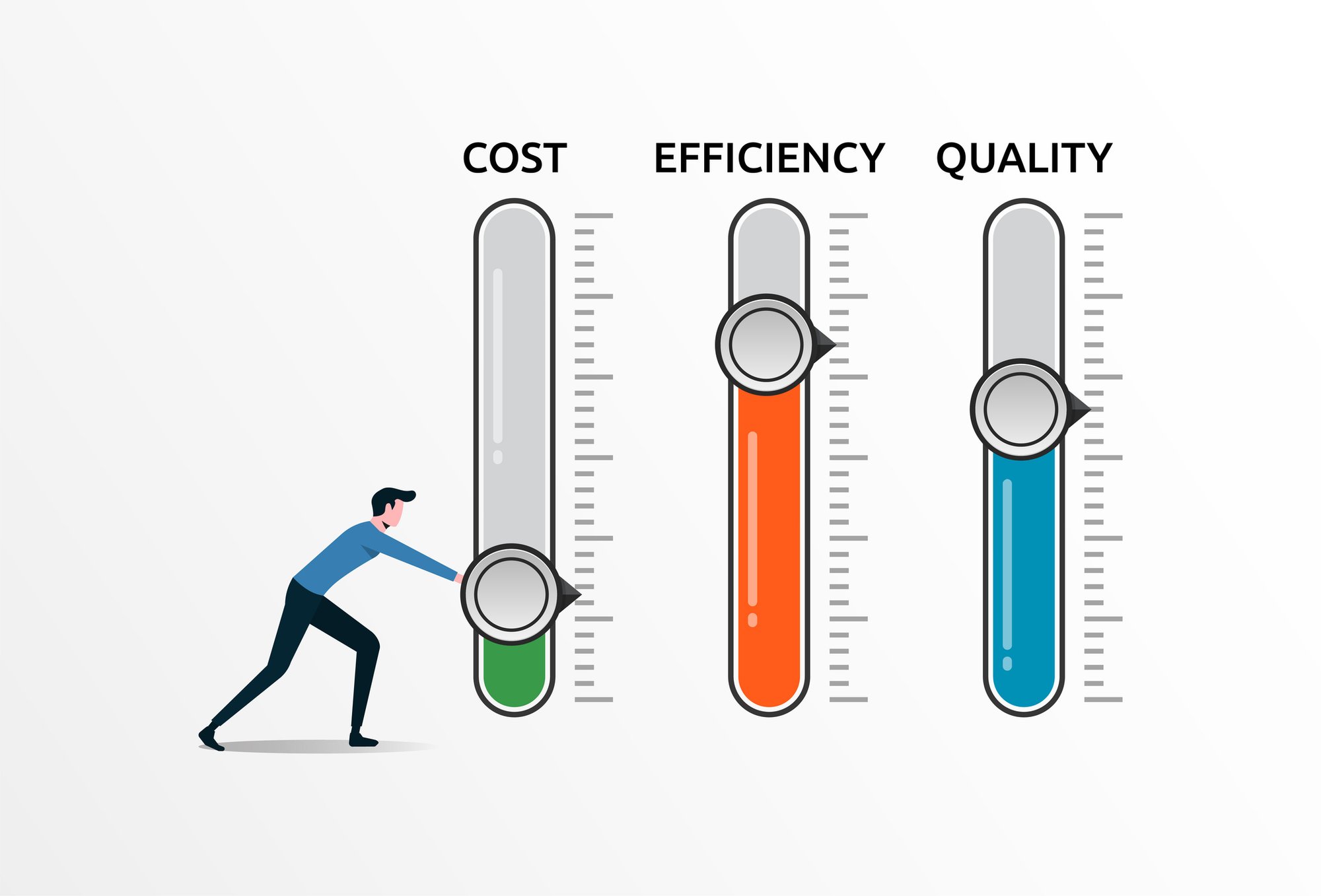
As AI adoption expands, organisations must control how AI scales — operationally and financially.
Do you have visibility into how AI usage is growing across your organisation — and what it is costing?

Uncontrolled AI Growth
AI expands across teams without visibility, leading to duplicated solutions and escalating cost.
Lack of Cost Predictability
AI usage varies across systems and models, making it difficult to forecast and manage spend.
Controlled, Cost-Effective AI
Governance enables organisations to monitor usage, optimise performance and scale AI in a predictable, cost-efficient way.Ensuring AI adoption remains aligned to business value and delivers sustainable return on investment.
The Operational Core of the Enterprise AI Architecture
The AI Control & Operations layer forms the operational core of the OpenSky Enterprise AI Architecture. It establishes the governance, monitoring and operational controls required to manage AI systems safely at scale. Without this layer, organisations struggle to demonstrate oversight, accountability and regulatory compliance as AI adoption expands.
-1.png)
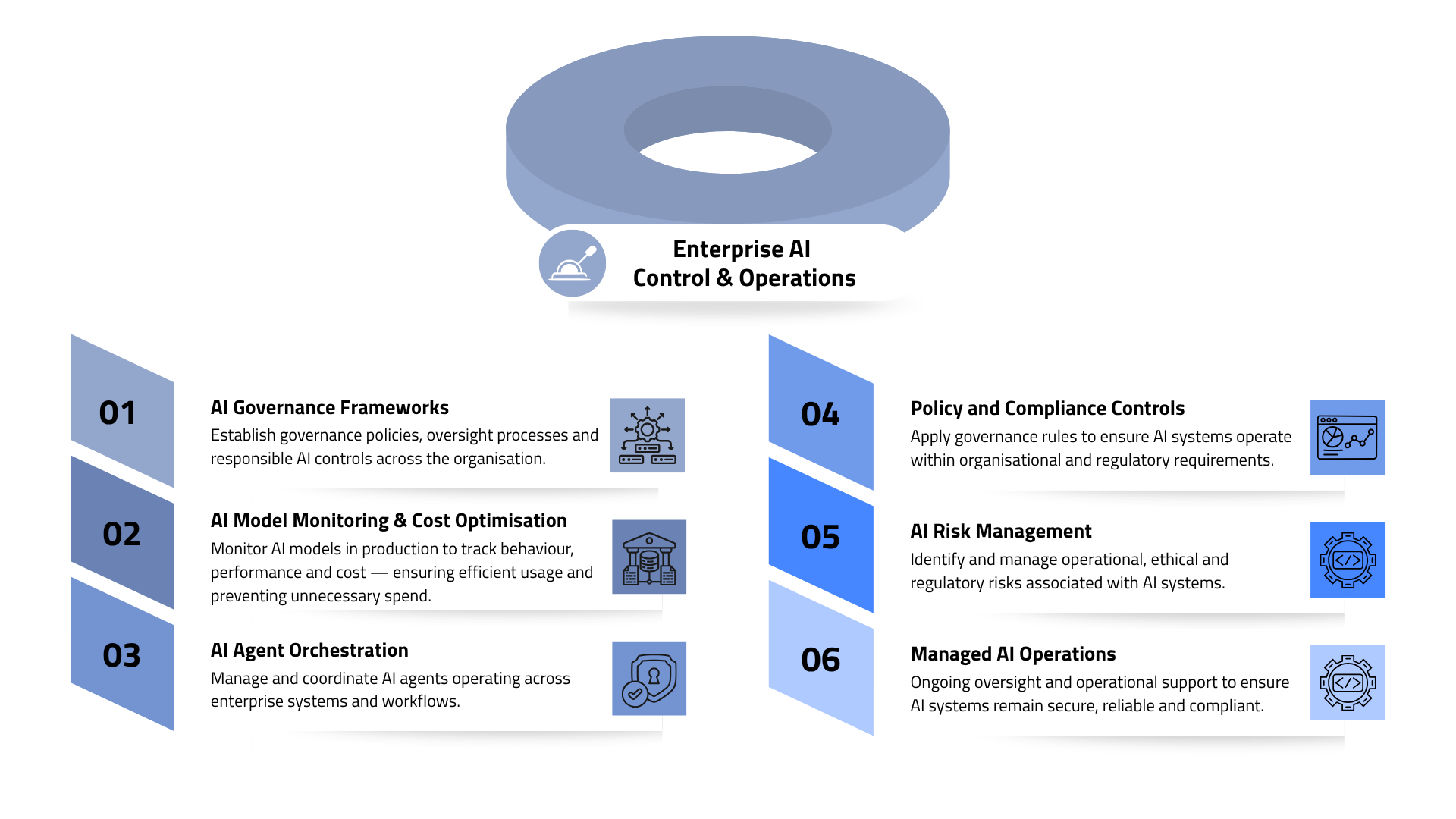
Capabilities Inside the AI Control and Operations Layer
The AI Control & Operations layer provides the governance, monitoring and operational controls required to manage enterprise AI systems safely, responsibly and cost-effectively.
These capabilities enable organisations to maintain visibility over how AI models and agents operate across enterprise systems, while ensuring that AI systems remain aligned with organisational policies, regulatory obligations and cost expectations.
Together, these controls allow organisations to operate AI with the transparency, accountability, cost control and operational oversight required as AI adoption expands.
What This Enables for Organisations
Establishing operational control over enterprise AI systems allows organisations to adopt AI with confidence while maintaining accountability, transparency and regulatory compliance.
With the governance, monitoring and cost management capabilities provided by the AI Control & Operations layer, organisations can:
- Demonstrate governance and oversight of AI systems operating across enterprise environments
- Monitor how AI models influence operational decisions and ensure outcomes remain reliable and explainable
- Apply organisational policies and regulatory requirements to AI systems in production
- Manage the operational risks associated with AI deployment across business processes
- Control and optimise AI usage to prevent unnecessary cost and ensure predictable scaling across the organisation
- Scale AI adoption across the organisation while maintaining visibility and control
.png?width=1287&height=285&name=OpenSky%20AI%20Enterprise%20AI%20Architecture%20(4).png)
Together, these capabilities enable organisations to operate AI systems responsibly and safely as AI becomes embedded across enterprise operations.
Typical Engagement Scenarios
Organisations typically engage OpenSky to establish operational governance and control over enterprise AI systems as AI adoption expands across their environments.

(1) CIO Establishing an Enterprise AI Framework from Day One: Leadership seeks a structured, governed approach to AI adoption across the organisation.
(2) CFO Managing Runaway AI Costs: AI usage has expanded across teams, creating unpredictable cost and the need for visibility and control.
(3) AI Tools and Copilots Are Being Adopted Across Teams: Departments begin using AI tools and copilots, but there is limited oversight of how these systems influence work and decisions.
(4) AI Models or Automation Are Already in Production: AI models or automation solutions are operating in business systems, but monitoring and governance controls have not been established.
(5) Preparing for AI Regulation: Organisations need to understand their responsibilities under the EU AI Act and implement governance for AI systems already in use.
(6) AI Agents Interacting with Enterprise Systems: AI agents and automation begin interacting with enterprise platforms, creating the need for operational control and oversight.
(7) AI Adoption Growing Faster Than Governance: AI use expands across the organisation, but leadership recognises that governance and monitoring must be introduced before adoption scales further.
Part of the Enterprise AI Architecture
The Enterprise AI Control and Operations layer forms the governance and operational control centre of the OpenSky Enterprise AI Architecture.
It enables organisations to monitor, govern and manage enterprise AI systems as they move from experimentation into real operational environments.
This layer works in combination with the other architecture layers to support safe and scalable AI adoption:
• Data Intelligence Foundation
• AI-Driven Enterprise Operations
Together these layers enable organisations to deploy, govern and operate AI systems safely across enterprise environments.

Explore the Other Layers of the AI Architecture
Data Intelligence Foundation
Establish the secure, governed data environment required to support analytics, machine learning and enterprise AI systems.
AI-Driven Enterprise Operations
Deploy AI agents and intelligent automation within operational workflows to improve decision-making, efficiency and service delivery.
Trusted Expertise in AI Governance and Responsible AI
Establishing governance and operational control for enterprise AI systems requires more than technology.
It requires expertise in data governance, regulatory frameworks, enterprise architecture and responsible AI practices.
OpenSky works with organisations operating in regulated and high-impact environments, helping them deploy and operate AI systems safely, transparently and responsibly.

Experience in Regulated Sectors
OpenSky has delivered enterprise data and AI platforms across healthcare, life sciences and the public sector — environments where governance, transparency and compliance are essential.Alignment with Emerging AI Regulation
Our AI governance approach aligns with emerging regulatory frameworks including the EU AI Act, helping organisations establish the oversight and accountability required of AI deployers.
Microsoft Data and AI Specialisations
OpenSky holds multiple Microsoft Solution Partner designations and specialisations across the Microsoft Data and AI ecosystem, enabling us to design and implement enterprise AI platforms on secure cloud architectures.